

Health care is forever changing as technology evolves and new ways of digital monitoring, reporting and communicating become available for lay people and professionals (Lupton, 2018). There is less reliance on medical professionals, as individuals take researching and self-diagnosing into their own hands as information online is so readily available. There is less need to make appointments as individuals are put in control of their own health by monitoring at home using devices (Lupton, 2018).
However, with health information so readily available for people to educate themselves, health literacy skills are more important than ever. This highlights an issue which is an implication for teachers. Student’s need to learn health literacy skills so that they have the knowledge and ability to source, understand and communicate information and concerns about health (Nielsen-Bohlman et al. 2004), this is especially important if students do not have a trusted person they can seek advice from.
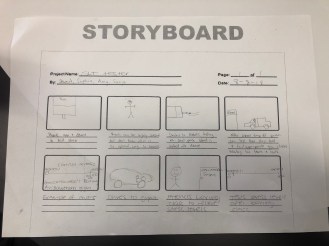
An example of a pedagogical process that demonstrated the use of design-based thinking occurred in the workshop activity. In this activity the words blood, parents,gymand motivatedwere key words required to be used to create a digital health tool that could affect health positively. The digital health technology created was a device that plugs into a mobile phone, where the user pin pricks their finger and uses the mobile device to test the cortisol and testosterone levels in their blood. The app on the phone then tells the user their stress levels and appropriate ways of combating this, eg. boxing or meditation classes. The aim is to assist parents who are time poor but very stressed with everyday activities. By creating this device parents can be aware of their mental health and take action themselves without having to waste time and money going to the doctors when they eventually get run down from stress.
This activity allowed for creativity and innovation to design new ideas in the digital health field. In regard to Bloom’s taxonomy, design-based thinking activities sit at the top of the pyramid which involves challenging and engaging learning (Wallace, 2014). Furthermore, the design-based activity above, involved student creativity and the use of digital tools, which is a 21stcentury pedagogy skill (Casper &Westhoff, 2015). An implication for teachers in the classroom is lack of knowledge on new technology which can inhibit the ability to use 21stcentury pedagogy.
Casper, S. & Westhoff, L. (2015). Digital Tools and Disciplinary Learning: teaching History with Technology. The Journal of American History. 101(4). 1190-1191. Retrieved from: https://doi-org.ezproxy.lib.monash.edu.au/10.1093/jahist/jav021
Lupton, D. (forthcoming 2018). Digital Health Care. In G. Scambler (Ed.), Sociology as applied to health and medicine (7th ed.) London: Palgrave.
Nielsen-Bohlman, L., Panzer, A. P. & Kindig, D. A. (2004). Health Literacy: A Prescription to End Confusion.Retrieved from: https://www.nap.edu/read/10883/chapter/1
Wallace, S. (2014). Bloom’s Taxonomy.A Dictionary of Education. Oxford University Press. Retrieved from: http://www.oxfordreference.com.ezproxy.lib.monash.edu.au/view/10.1093/acref/9780199212064.001.0001/acref-9780199212064-e-115.
 Health Education in the Secondary Years